Paella in Tenerife: which one to order and why the black one nearly always wins
Valencian, seafood or black rice: why it's cooked to order and why it's worth the wait.
· 6-minute read
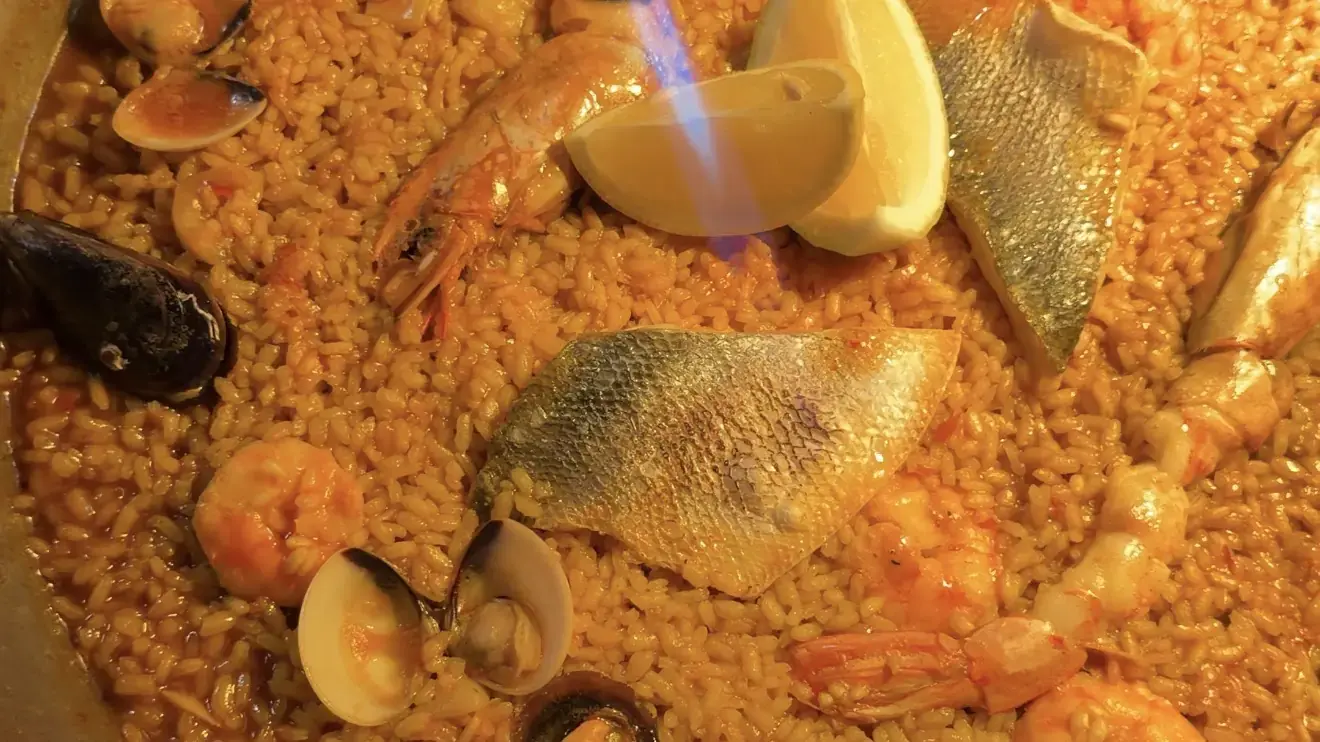
Our paellas and what they cost
There are four paellas on our menu. They're charged per person, with a minimum of two, because a paella is made in one pan for several people and doesn't work as a single portion. Prices from the winter 2026–27 menu, including IGIC (the Canary Islands sales tax, instead of VAT):
- Paella in the style of El Molino Blanco, €30 per person. With rabbit, garrofón beans and green beans. It's the chef's recommendation.
- Seafood paella, €35 per person. With fresh fish and a mix of shellfish.
- Black paella, €30 per person. Black rice cooked with cuttlefish, with prawns and aioli.
- Vegetable paella, €28 per person. With seasonal vegetables and green beans.
For two people, the paella comes to €60, €70, €60 or €56, depending on which you choose. The prices on the website are the same as in the restaurant.
What goes into a real Valencian paella
Paella was born in the countryside around Valencia, not by the sea. The official recipe published by the Valencian Region's tourist board (Turismo de la Comunitat Valenciana) has chicken, rabbit, flat green beans, garrofón (a large white bean), tomato, olive oil, sweet paprika, saffron, salt, water and round rice. Rosemary and snails, if you like. Since 2021 Valencian paella has been protected as Intangible Cultural Heritage (Bien de Interés Cultural Inmaterial) by the Valencian regional government.
There's no seafood in it, no chorizo and no peas. That doesn't make it better or worse than other paellas, but it's worth knowing: when a menu says “Valencian” and it comes with prawns, it isn't the Valencian one.
Ours, the Paella in the style of El Molino Blanco, follows that country recipe: rabbit, garrofón and green beans. We don't call it Valencian because it doesn't follow the full recipe.
What black rice is
Arroz negro, black rice, is a fishermen's rice dish from the Valencian coast, from Castellón to Alicante. The colour comes from squid or cuttlefish ink, which goes in with the rice from the start. It doesn't taste of ink: it tastes of the sea, of a seafood base and fish stock. It's eaten with aioli, a garlic and olive oil sauce, and the pairing is the whole point of the dish.
Outside Valencia a lot of people call it black paella, and that's what we call it on the menu: black paella with cuttlefish, prawns and aioli.
Why the black one nearly always wins
It isn't a statistic. It's what we see at the tables and what guests tell us. A review in Italian from August 2026 sums it up in one line: “Vi consiglio di prendere quella nera, è la più buona”. I'd recommend the black one, it's the tastiest. Three reasons:
- The flavour reaches all the rice. In a seafood paella, the seafood sits on top and the rice goes with it. In the black one, the taste of the sea is in every grain, because the ink cooks with it.
- The aioli. A paella on its own can get a bit much halfway through. With aioli, every spoonful is a little different.
- The price. It costs the same as the house paella, €30 per person, and five euros less than the seafood one.
When doesn't it win? When someone at the table doesn't eat seafood, or there are children who are wary of black rice. Then the house paella or the vegetable one keeps everyone happy.
If there are two of you and you can't decide, go for the black one. If there are four, one black and one house paella.
Why you have to wait for it
A real paella isn't reheated. The rice needs its time: in the official Valencian recipe, 15–18 minutes of cooking once the rice goes in, over three different heats, and another 5 minutes resting off the heat before it's served. That's not counting the sofrito and the stock, which are made first. If a paella reaches your table five minutes after you order it, it wasn't made for you.
Here every paella is cooked to order, when you ask for it. On average, allow about 25–30 minutes from ordering to the paella arriving at your table.
So our advice is simple: if you want paella, order it when you sit down, with the drinks. In the meantime, have some papas arrugadas or a salad, and the paella arrives when it should.
How to order it
- Minimum two people per paella. If there are three of you, order for three.
- Order it at the start, not after the starters.
- If you have an allergy, tell us before you order. Shellfish, fish and celery are in several of the paellas, and in the dining room we'll confirm what goes into each one.
- With children, the vegetable paella or the house one are the easiest. We cover that in An early dinner with children in Costa Adeje.
To drink, a dry Canarian white or a malvasía goes well with the black paella and the seafood one. We talk about the island wines we have in the article on Tenerife wines.
Where this comes from
- Valencian paella recipe and timings: Turismo de la Comunitat Valenciana, official recipe as a PDF (opens in a new tab), checked on 10 November 2026.
- Black rice: Turismo de la Comunitat Valenciana, black rice recipe (opens in a new tab), checked on 10 November 2026.
- Intangible Cultural Heritage: Decree 176/2021 of 29 October, of the Consell de la Generalitat Valenciana.
- Paellas, prices and descriptions: El Molino Blanco menu, winter 2026–27.
- The quote: a Google review, August 2026.
If anything here has changed, tell us at the table or on +34 620 77 00 72 and we'll put it right, with the source in front of us.
Order the paella when you sit down
That way it arrives when you're ready for it, not after you've finished your starters. We're open every day from 5pm to midnight.